







Los Ratones in the LEC: Why Nobody Ignores Them
If you have been following League of Legends esports for a while, you already know how this works:
you do not need to win Worlds to get hate. Sometimes, you just need to exist — and be loud enough.
Los Ratones were loud from day one.
Since their appearance around the LEC ecosystem, conversations have not stopped. Fans, critics, analysts, stream chats, Reddit threads — everyone has an opinion. And that alone already tells you something: this team is not just another name on the standings.
But where does all this hate come from? And why does Los Ratones trigger such strong reactions compared to other teams?
Let’s break it down properly.
Where Los Ratones Actually Come From
Los Ratones is a competitive project led by Marc “Caedrel” Lamont, former pro player and one of the most influential League of Legends analysts and streamers in Europe.
From the start, the project felt different. Not just because of Caedrel’s involvement, but because of the philosophy behind it:
a serious competitive roster built with a content-first mentality, without pretending to be a traditional esports organization.
That difference matters.
The roster itself added fuel to the fire. Names like Nemesis, Rekkles, Crownie, Thebausffs, among others, come with massive personal fanbases. Each player already had history, supporters, critics, and expectations before the team even played its first official match.
When you stack recognizable names like that, you are not just building a team — you are building narratives.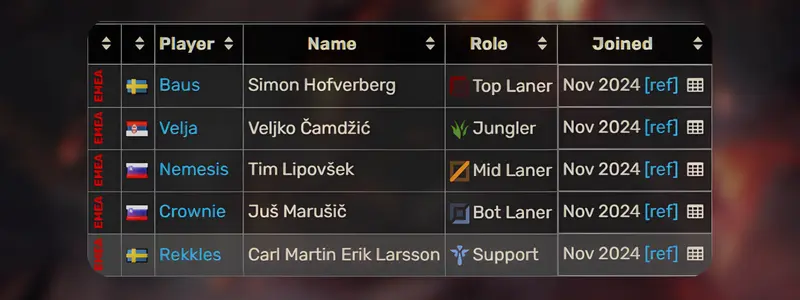
Reason #1: “This Is a Streamer Team, Not an LEC Team”
One of the most common criticisms sounds familiar:
“This is just a streamer project.”
For a portion of the community, Los Ratones does not “feel” like a traditional LEC team. And to be honest, that is partly true — by design.
The LEC has long been associated with structure, branding, controlled media appearances, and polished storytelling. Los Ratones entered with a much more open, raw, internet-driven approach. More transparency, more personality, more exposure.
Some fans love that. Others hate it.
To certain viewers, Los Ratones represents a shift they are not comfortable with:
less corporate esports, more creator-driven competition.
And whenever esports changes direction, resistance is guaranteed.
Reason #2: The “Privilege” and Access Debate
This is where things get more sensitive.
A big part of the hate is not directed at the players themselves, but at what Los Ratones represents within the competitive ecosystem.
Discussions around access to top-tier competition, invitations, formats, and Riot’s decisions quickly turned Los Ratones into a symbol of “who gets opportunities and why.”
For some fans, it looked like a shortcut.
For others, it looked like Riot favoring visibility and engagement over tradition.
Whether those claims are fully accurate or not is almost irrelevant — once that narrative exists, it sticks.
In esports, perception often matters more than facts.
Reason #3: Streaming Scrims and Competitive Transparency
One of the most controversial aspects of Los Ratones was their approach to transparency, including streaming scrims during certain stages of the project.
This sparked a serious debate:
Is streaming practice good for the scene, or does it break competitive integrity?
Supporters argued that:
-
It educates viewers
-
It humanizes pro players
-
It creates real engagement
Critics argued that:
-
It creates unfair pressure
-
It exposes strategies
-
It forces rule changes
At one point, the conversation reached a level where rules and restrictions around scrim streaming became part of the broader discussion.
Even if Los Ratones were not the only factor, they became the face of the controversy.
And once again, being the face of change means absorbing the backlash.
Reason #4: A Massive Fanbase Comes With Side Effects
This part is uncomfortable, but necessary to say.
When a team has a huge and passionate fanbase, a small percentage of toxic behavior becomes very visible very fast.
Some fans cross lines in chats, social media, and comment sections. And when that happens, the internet does what it always does: it generalizes.
One toxic fan becomes “the community.”
One bad interaction becomes “the team’s fault.”
Caedrel and the people around Los Ratones publicly addressed this and took a strong stance against toxicity, making it clear that harassment was not acceptable under their banner.
Still, reputations are hard to clean once the label sticks.
Reason #5: Hatewatching Is Very Real
There is also something simpler at play: hatewatching.
A lot of people who claim they cannot stand Los Ratones never miss a game.
They tune in waiting for mistakes.
They clip misplays.
They downplay wins.
And ironically, that attention only increases the team’s relevance.
In modern esports, being talked about constantly — even negatively — is power.
So… Is the Hate About Gameplay or About Meaning?
Mostly about meaning.
Los Ratones represents:
-
The clash between traditional esports and creator-driven competition
-
A challenge to old structures
-
A shift in how teams build audiences
-
A community that refuses to be quiet
That combination makes them impossible to ignore.
They are not neutral.
And neutral teams do not spark conversations.
A Quick Reality Check for Fans and Critics
If you dislike Los Ratones, criticize drafts, macro decisions, rotations, and adaptation. That is fair.
If you support them, do it without attacking other teams or communities.
League of Legends is more fun when debates stay about the game, not personal attacks.
Important Note: Buying Online? Watch Out for Scams
Quick but important reminder while we are here:
-
Always be careful with fake links, cloned websites, and suspicious DMs offering “deals.”
-
If you ever need an invoice, request it directly through the official support chat on the website. That is the safest and fastest way to handle it.
And speaking of League of Legends passion — your main champion does not have to live only on your screen.
You can design a fully personalized loading screen artwork at zethacraft.com and see it update in real time while you customize it. 
Final Thoughts: Los Ratones Are a Mirror of the Scene
The hate around Los Ratones says as much about the community as it does about the team.
Change creates noise.
Noise creates division.
Division creates engagement.
Love them or hate them, Los Ratones are part of the LEC conversation now — and they are not going anywhere.
If your main champion means something to you, give them a place in your gaming space.
Create your personalized design at zethacraft.com and bring your League identity into the real world.